
Texas thinks of itself as young, and by the numbers it still is, with a median age well below the national figure. But a shift recorded in recent census data complicates that self-image in a way that ripples straight into dentistry.
The story is not that Texas got old overnight. It is that the oldest segment of the population is now growing faster than any other, even as the state keeps adding children and working-age residents.
For the dental specialties tied to tooth loss, which rises sharply with age, that single trend is the most important demographic fact in the room.
The Age Group Pulling Ahead
According to reporting on the latest census figures, the population of Texans 65 and older grew faster than any other age group since the start of the decade. The number of older Texans rose roughly 3.8 percent in a single year, outpacing the nation.
State demographers project the trend deepening for decades. By 2060, current projections put Texans 65 and older at around 22 percent of the population, moving the state toward what demographers call an ultra-aged society.
The longer-range projections are even more pointed. The 65-and-older group is expected to be the fastest-growing age band for decades, with some estimates putting its increase well above 80 percent between the early 2020s and 2050. Dozens of Texas counties already count more seniors than children.
This is not a uniform story across the map. Suburban and exurban counties in the Austin and San Antonio orbit are absorbing both young families and aging residents at once, which produces a population that is simultaneously getting younger at the bottom and heavier at the top.
Hays County, with Kyle near its center, sits squarely in that double current.
The strain shows in the supporting numbers. The working-age population has not kept pace with the growth at the top of the age pyramid, a gap state demographers warn could eventually weigh on the broader economy.
Older Texans also face pressure the raw growth figures hide. The state carries some of the highest rates of residents without health insurance in the country, and high housing costs press on fixed incomes. One analyst put it bluntly: Texas is less equipped than many states to care for an aging population.
It is worth keeping the scale in proportion, too. Texas remains relatively young overall, with a median age still under 36 against a national figure near 39. The state is not old. It is aging fast from a young starting point, which is a different and in some ways more sudden kind of pressure.
Why Aging and Tooth Loss Travel Together
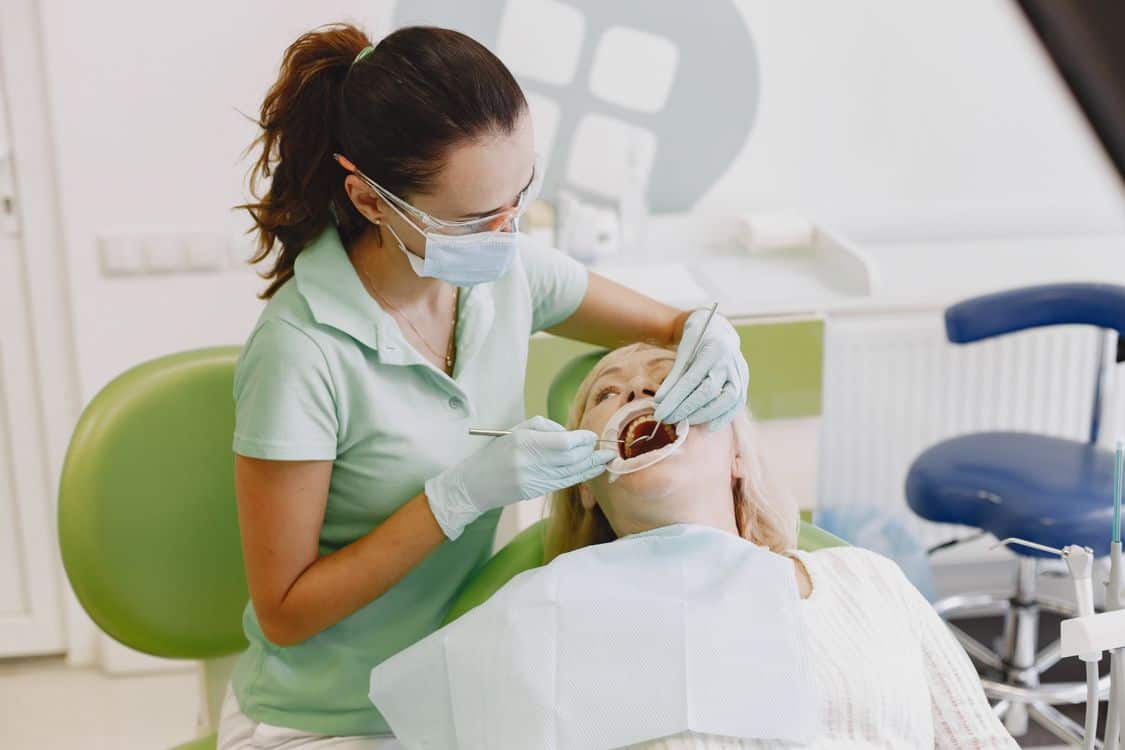
Tooth loss is not evenly distributed across a lifetime. It accumulates, and it accelerates in later decades as the effects of past decay, gum disease, and old dental work compound.
That is why an aging population reads, in a dental office, as rising demand for the heavier interventions. Not more cleanings, but more extractions, more full-arch decisions, more patients arriving with failing dentitions that need a comprehensive plan rather than a single filling.
The arithmetic is simple and relentless. A region adding older residents faster than any other age bracket is, whether it intends to or not, building a larger pool of people who will face the keep-or-replace decision about most of their teeth.
National tooth-loss data underlines how tightly the two trends are bound. The share of adults who have lost all their teeth roughly doubles between the late-fifties bracket and the seventy-five-and-older group. As a population ages into those years, the need for comprehensive restorative work does not rise gently. It rises steeply.
Migration adds another layer specific to Texas. A growing share of the state’s growth now comes from people moving in rather than from births, and retirees and near-retirees are part of that inflow. Some of the demand arriving in suburban counties is not aging in place at all. It is moving in already in the high-need years.
Layer that onto Kyle’s broader population boom, and the demand signal for implant and full-mouth work in the area is reinforced from two directions at once.
What This Means for Planning, Not Panic
None of this argues that aging is a crisis. People are living longer, which is the good news underneath the statistics. The point is that the services older adults disproportionately need will be in heavier demand in exactly the places Texas is growing.
For individuals, the implication is about timing and access. As the 65-and-older cohort swells in the Austin metro’s southern counties, the practices that handle complex restorative work will field more of it.
Bone health is part of the same story. The longer a person waits after losing teeth, the more the jaw resorbs, which can narrow the options later. Aging into the high-need years and delaying are a poor combination.
For a community planning around an aging base, the sensible posture is to treat advanced dental capacity as part of the local healthcare infrastructure that has to scale with the population, the same way primary care and cardiology do.
The headlines about Texas growth tend to feature young families and new rooftops. The demographic line the state just crossed is quieter, but for the disciplines that deal with tooth loss, it is the one that will define the next decade of demand around towns like Kyle.