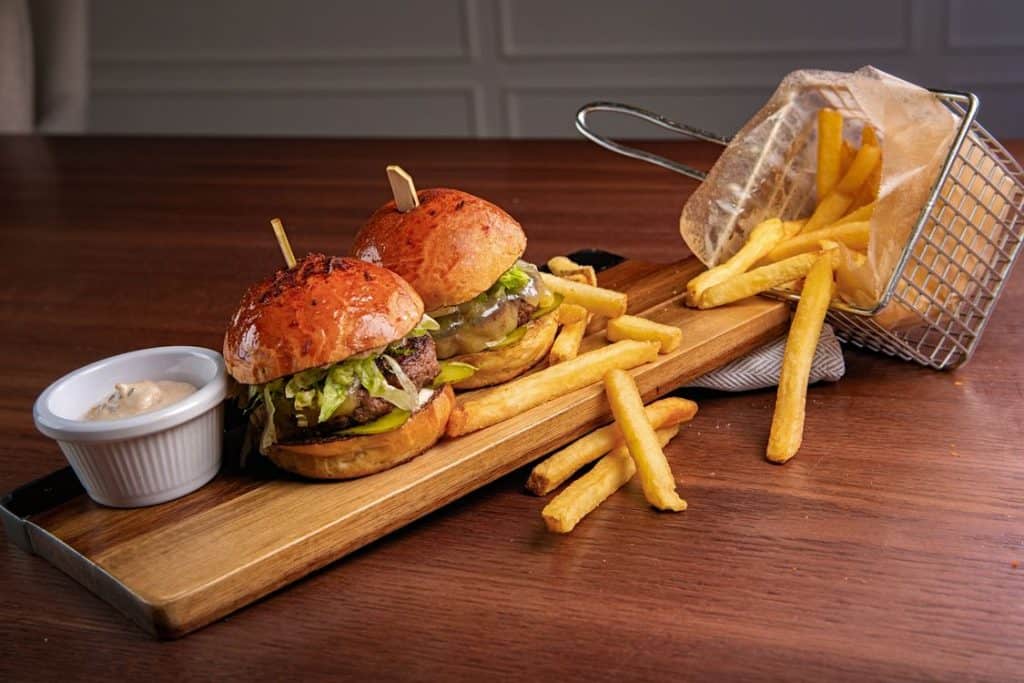
It is a little funny that one of the better plant-based menus in mainstream casual dining belongs to a chain famous for beer and burgers. But that is where Yard House has landed, and the 2026 version of its dining-out guidance shows just how far the offering has been built out.
The growth has been quiet, spread across years of menu tweaks rather than announced with fanfare. The result is a plant-based section substantial enough that a vegan or dairy-free diner can walk in without a backup plan.
What is interesting is not just what got added, but what got removed along the way.
The Gardein Backbone
The core of the plant-based offering is built on Gardein, the meat-alternative brand that appears throughout the menu. As laid out in a dining guide updated in February 2026, the lineup runs well beyond a token veggie burger.
Gardein wings come in several sauces, including whiskey black pepper, lemon pepper and Korean chili garlic, with buffalo and barbecue available when ordered without ranch. There are Gardein tenders, a Gardein chicken and avocado sandwich on a gluten-free bun, a Gardein chicken bowl and Gardein orange chicken served with spicy rice instead of the buttered jasmine rice.
Round that out with a Mediterranean veggie burger, a house salad, guacamole and chips, edamame, sweet potato fries and truffle fries without parmesan, and you have a plant-based meal with a real beginning, middle and end. That is more than most steak-and-beer establishments bother to assemble.
The Telling Subtraction
The more revealing detail in the 2026 guidance is something the menu used to have and no longer does.
For a stretch, the chain offered a vegan cheese alternative across its locations. According to the dining guide, that vegan cheese option has since been discontinued chainwide. For diners who relied on it, that is a genuine loss, and it changes how several dishes can be ordered.
It also reflects an honest reality of how big chains manage menus. An item that does not move fast enough gets cut, even one that served a dedicated audience. The vegan lineup grew in some directions and contracted in others at the same time, which is how real menu evolution usually looks rather than a straight march forward.
There are other limits worth knowing. The pizza crust contains dairy, so even a cheese-free pizza is not dairy-free. The standard hoagie and brioche buns contain milk, though a gluten-free bun doubles as the dairy-free and vegan option. And many items share fryers and grills with allergen-containing foods, so cross-contact is a standing caveat.
Why a Beer Hall Bothers With Any of This
The strategic logic is straightforward once you think about group dynamics. A plant-based or dairy-free diner rarely chooses the restaurant alone, but they very often can veto it. One person in a party of six who cannot eat anything on the menu is enough to send the whole group elsewhere.
By maintaining a real plant-based section rather than a single sad option, the chain removes that veto. The vegan in the group has several genuine choices, so the omnivores get to keep coming for the burgers and the beer wall. The plant-based menu is partly there to protect the rest of the menu.
That framing also explains the willingness to cut the vegan cheese while keeping the broader Gardein range. The goal was never to be a vegan destination. It was to make sure no single diner’s needs torpedo a group booking, and a deep, regularly pruned plant-based section does that job better than a frozen, never-updated one ever could.